Portrait – Beth Consetta Rubel and Nafis M. White
Curator: Beth Consetta Rubel

Portrait: a pictorial representation of a person usually showing the face.

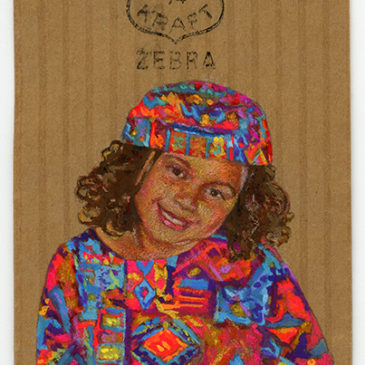
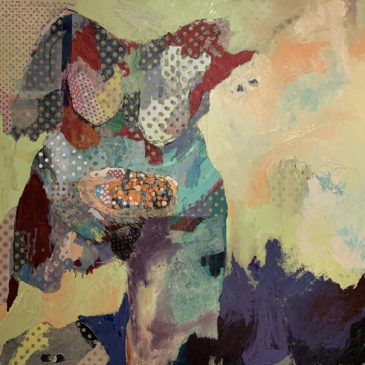
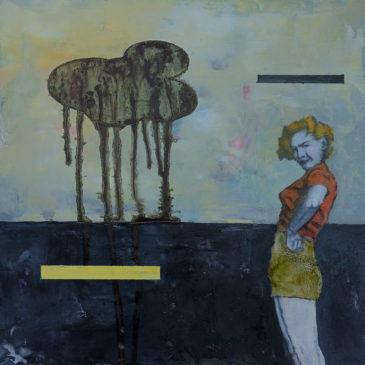
Wayne Shorter’s seminal work titled Portrait is the impetus and inspiration behind both the exhibition title and the bodies of work that unite the practice of artists Beth Consetta Rubel and Nafis M. White. Just as Shorter conflates simple and compound meter in jazz by bridging African, swing and cross rhythms to create new pathways of intellectual discourse, Rubel and White take a similar approach uniting themes of accumulation, belonging, abstraction and portraiture towards the synthesis of ideas around identity and power. Using color theory as a through line while moving beyond simple definitions prescribing guidelines for use of color, White and Rubel instead utilize chroma as a way to increase power, resonance, and urgency through abstract narratives. Like Shorter, the melodies shift frequently within the work lending itself to lead new lives often in simultaneity.

The Resistant Gesture – Curator: Tavarus Blackmon
Artist: Sydney Acosta, Caiti Chan, Jodi Connelly, Elizabeth Joy Cord, Rachel Deane, Hea-Mi Kim, Amy Nathan, Holly Smith

Merriam-Webster defines Resist as the ability “to withstand the force or effect of.” In today’s society of American Culture it can be argued that there are many opportunities to rebuff an undesirable force. And though there is no firm consensus on this issue, though across the globe there is a state of survey and activity, where previous ways of thinking are being processed and re-imagined, here at home there is fewer consensus on basic and fundamental issues.

The artists in this exhibition have powerful, nuanced and emergent voices. In a market where there are many – though complicated – moments to resist an exerting force they are here, cultivating a space of identity, solidarity and grace. Recently, in noting forces in the Art World and methods on how to “withstand,” activists and artists have protested the role of Warren B. Kanders as the Whitney Museum of Art’s (NY), Board Vice Chairman. They cited his defense manufacturing company, Safariland, and its production of tear-gas canisters used against asylum seekers about the U.S./Mexico border. This may have influenced his resignation.

And with this work, Resistant Gesture is full of intention, discovery and affirmation, similar to currents vibrating nationally and globally in the effort to withstand a force or effect. The artists articulate keen ideas with material fluency, visual resonance and cultural reflection. This is a most profound expression of what is both sensitive and assertive, and how shifts in thinking present the critical vision in the position of authorship.

The Resistant Gesture encompasses many forms, media and methods of demarcation. It is by a subtle stroke, a tender indication or by placing roles of authority in humorous indignation, that new voices precede new ways of thinking. And, how the act of making itself becomes oppositional to an ordinary experience.

Nick Shepard
A Mechanized Pencil

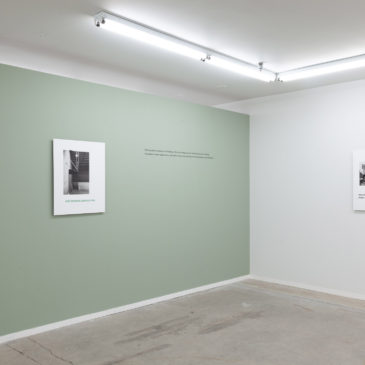
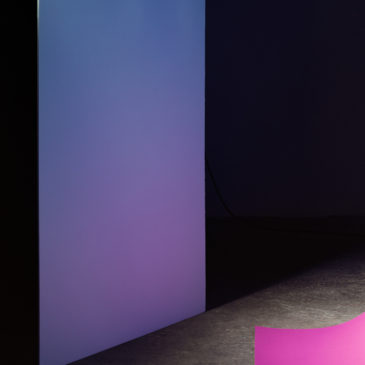
Axis Gallery is pleased to present “A Mechanized Pencil,” an exhibition of photographs in a site-specific installation by Nick Shepard on view from October 4 through October 27, with a Second Saturday reception with the artist on Saturday, October 12, from 6:00–8:00 pm. Shepard will present an artist talk Friday, October 4. This is Shepard’s second solo exhibition at Axis Gallery. Shepard’s work is grounded in a deep understanding of art history and the relationship between photography and other media. He makes frequent use of digital and analog processes to create images that are easily mistaken for paintings, but remain undeniably photographic.

DIDA One Person Group Show – Omar Thor Arason

Our conception of reality is really just a story that we tell ourselves to provide a coherent narrative that we can place ourselves within. Recent studies and emergent theories regarding the nature of consciousness, the illusion of free will, and theory of mind shed light on how precarious our personality traits and our “nature” are. With seemingly minor trauma to the brain, shift in gut-biome, or the ingestion of a psychoactive substance, a person can be permanently and radically changed. It is this volatile aspect of our “selves” that has become a recurring theme in my studio practice, both in regard to content, but also in approaches to the work, which at times produce results that seem both unfamiliar and alien.

The Idea of Undoing: a 25 year survey of the art of Phil Amrhein – Curated by Angela Casagrande

Axis Gallery is pleased to present a selection of work from former Axis Gallery member, Phil Amrhein. The Idea of Undoing: a 25 year survey of the art of Phil Amrhein displays the evolution of Amrhein’s work over  a 25 year period from early figurative paintings to current, black  voids. His exploration of the aesthetics of black began as a rejection of  decorative painting styles, rendering a canvas without a discernible reference by removing what is recognizable. Amrhein’s minimalist sensibility engages with the painting as a visual object which, according to the artist, “engages the eye more than the mind.” His paintings embrace nothing and reflect his process of destructive reduction, freeing the work from the constraints imposed byrepresentation.

QWERTY – a show about “work” in the information age

William Mead and special guest Lauren Kelly
posted in: Bill Mead, Main Gallery show, Shows | 0

This collection of work by William Mead, along with guest artist Lauren Kelly, explores some of the many facets of working in a digital, Information Age, where our interactions with our colleagues is often mediated through the use of a keyboard and a screen. Our digital information driven work has seeped into our souls and is part of what defines our relationships as well as who we are as individuals. It stands, at times, in stark contrast to physical labor.

Angela Casagrande – “Everything That I Could Keep Inside”

In her latest exhibition, Everything That I Could Keep Inside, Angela Casagrande’s new work is centered around the afterlife of memory. Resulting from a fascination with the frailty of memory, her work examines memory as an aspect of liminal space, the beings that inhabit this space and the artifacts left behind, both physical and immaterial. Her graphoscopes serve the dual purpose of reliquary and assemblage – both housing sentimental mementos while displaying these items as narrative pieces. The act of encasing photographic images in encaustic wax refers to methods of Spiritualist communications with the spirit world through wax divination, along with preservation and occult binding practices. By coating these images in layers of wax, Casagrande binds the memory in place, saving it from decay.