Summer Ventis – Held Breaths

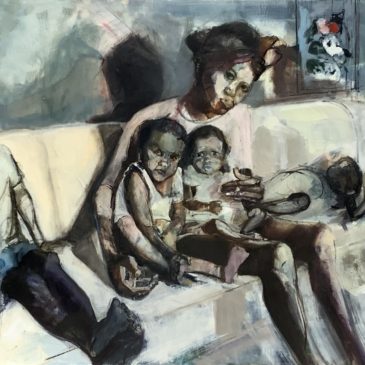
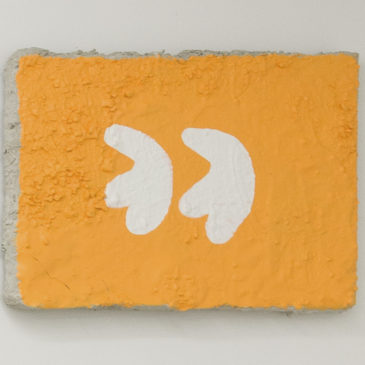
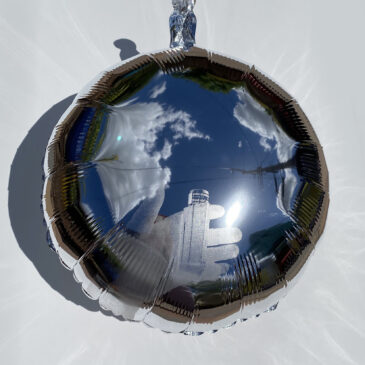
The last year and a half has been one long held breath; a time of caution, of waiting, of restraint, of restriction and withdrawal. It has brought new hardships and magnified existing ones, but it has also forced us to find new ways to connect. The works in this exhibition are a meditation on the times in which we find ourselves. They are a way of externalizing and processing the tension and fear with which we live, and also a celebration of new forms of connection and communication that have emerged as a result of our separation from each other. I offer my held breath to you; I offer to hold your breath for a moment so that you might find a better way to breathe.
Richard Gilles – HOUSE II

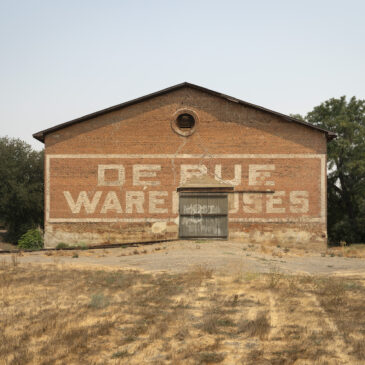
What does a house symbolize and what symbolizes a house.

When asked to draw a house a child will most often draw a rectangle with an isosceles triangle on top. After adding a door and a window or two you have the standard drawing of a house. This rudimentary shape has become a universal symbol of a house. With computers this symbol has become simplified even more to become an icon. The “home” icon is used to return the user to the start, to back the user out of complexity and return the user to a place of relative safety.

Eliza Gregory – [Placeholder]

A lot of amazing people are working on the theme of humans’ relationships to the places they live—the planet as a whole, and the micro-ecosystems of each home, thinking about how we relate to our neighborhoods and local environments. My work on this topic has begun with an investigation of the work of others, from looking over my colleague and co-teacher Doug Dertinger’s shoulder at his decades-long research into visualizing landscape, to reading the new book by Suzanne Simard about her research into forest intelligence, to speaking with my friends and neighbors about the plants they nurture and the creatures they observe on their farms and in their gardens. This exhibition is an invitation to you to enter this research alongside me, and it’s a question to you as well—what else should I look at? What else should I think about? How do you think about and engage with land, with your physical home? I’ll be in the gallery to hear your answers, paper and pens will be provided, or you can send me a message at info@elizagregory.com

Roma Devanbu – Stone Doily, New Cut Paper Work

posted in: East Room show, Roma Devanbu, Shows | 0

Most of us remember using scissors to cut snowflakes from folded paper. Roma Devanbu’s cut paper work has its roots in the traditions of the homemade. The larger works in Devanbu’s current show, “Stone Doily”, take direct inspiration from her own great-grandmother’s quilts, painted china and tatted doilies. The exhibition also includes a number of smaller pieces depicting domestic furnishings and imaginary friends.

Kenna Doeringer – Anthem

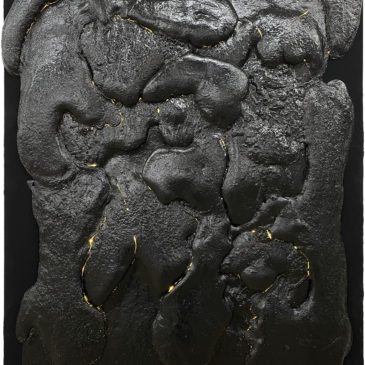
At first we fear change but once we learn to accept it, we can welcome and embrace it. Sometimes an evolution needs to be forced, causing a crack to form in the facade we create to protect ourselves, and see the light to start to break through. The light promoted the growth, it fed it, nurtured it, and cultivated it allowing expansion and continued development never imagined possible. “Anthem” is a visual representation of breaking through the illusion, allowing oneself to grow freely, and sharing the light with others. Anthropomorphizing these emotions as a freely formed amorphous structure it allowed for the cracks and imperfections to be embraced and enhanced. The light increases as the composition grows, and verges on dominating the entire canvas.

Indices of Being – Curator, Tavarus Blackmon

Aleksandra Avramova, Zeina Baltagi, Elizabeth Cord, Michelle Lee, and Julia Rigby

Today is a place of uncertainty but there is hope, struggle and resistance. In the face of challenges large and small, institutional and interpersonal, it is with will and courage we find ways to live our best lives and uplift others on this shared journey with empathy and compassion.

Indices of Being asks the question: in a time of patriarchal injustice, in a time of global warming and debate on climate change; native battles for water and land, atrocities in immigration policy; in a time of voter suppression, #Me Too, Black Lives Matter, Queer suppression and anti-Trans legislation, and, with gender biases in some of our finest Museums and gathering spaces of culture and intellect, what does it mean to be, in this most critical and vital moment from a woman’s perspective?

Nick Shepard – As Built

Axis Gallery is pleased to present an exhibition of new work by Nick Shepard on view from June 4–June 27, 2021. Shepard will present an artist talk Friday, June 11. This is Shepard’s third solo exhibition in Axis’s main gallery.

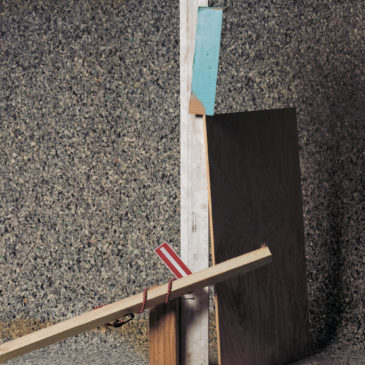
For this exhibition, titled “As Built”, Shepard displays photographs of temporary studio constructions that are cobbled together from scraps and zip ties, held in place with little more than some screws and gravity. As in his past shows at Axis, Shepard uses unfinished structures as physical interventions in the gallery and surfaces on which to display the printed images. For the first time, Shepard displays constructions in the gallery as sculptures.

Daniel Alejandro Trejo – Gravity Don’t Pull Me

posted in: East Room show, Shows | 0

Axis Gallery is excited to showcase the works of artist and curator, Daniel Alejandro Trejo, in a solo exhibition titled “Gravity Don’t Pull Me” in the East Gallery Space for the month of May.

This exhibition is an examination of personal narratives and experiences when environments become unreachable, alter through time, and a reconciliation for the discrepancies are exigent. It is inevitable to be propelled by personal motives for creating work from a bedrock of references and niche experiences. By emulating spaces from a future-oriented disposition that parallel registered sensations, Daniel Alejandro Trejo attempts to achieve familiar relationships while being spatially out of reach.